
Best Medicare Supplement Plans and Companies
Find Plans in your area with your ZIP Code
The best Medicare Supplement Plan depends on your individual needs and preferences. Healthy people generally need less coverage than individuals with chronic health conditions. Getting the best plan is all about striking a balance between coverage and cost.
We aim to help you find the best coverage for you. We’ll walk through the different features of the top Medicare Supplement Plans, look at some tips for cutting costs, and show you the easiest way to compare plans and get prices.
In this Article
Key Takeaways
- Medicare Supplement Plans are indemnity insurance products. Many of the top brands you know, like AARP, UnitedHealthcare, Aetna, Cigna, Humana, Mutual of Omaha, and USAA offer Medigap policies.
- There are 10 standardized plans designated by letters A through N.
- Also known as Medigap, each lettered plan covers some or all of the deductibles, coinsurance, and copayment in Original Medicare Parts A and B.
- The best-selling plans are Plan F, Plan G, and Plan N. The best Medicare Supplement plan for you may be different.
- Medigap plans cannot include additional healthcare benefits, such as prescription drug coverage or routine dental care.
- All providers that accept Medicare for payment also accept Medigap coverage.
- The terms Medigap, Medicare Supplement, and supplemental Medicare insurance all have the same meaning.
- Related: Best Medicare Advantage Plans for 2023
What Are Medicare Supplement (Medigap) Plans?
Medigap plans help cover some of the gaps in Original Medicare. Each plan provides more financial coverage by paying various deductibles, coinsurance, and copayments. Plans do not provide additional benefits, like coverage for prescription drugs or the government Flex Card for Seniors. Those are covered under a separate Medicare Part D plan or with a Medicare Advantage Plan.
Additional Reading: What is Medigap Coverage Used for in Medicare?
Types of Plans
In all but three states, there are 10 types of Medicare Supplement Plans available. Each standardized plan has a letter designation (A through N) and provides different levels of coverage for copays, coinsurance, and deductibles for Original Medicare Parts A and B. Massachusetts, Minnesota, and Wisconsin have their own plans that do not follow Medicare's standardized letter plans. Medigap plans are standardized by Medicare to include the same basic benefits regardless of where the policy is purchased. This makes comparison shopping easier. Choose the coverage you need and compare prices. Also See: 3 Most Popular Medicare Supplement Plans for 2023What Are The Benefits?
Medigap plans cover costs that traditional Medicare doesn’t cover such as copayments and deductibles. They provide additional financial coverage, not extra healthcare benefits. The primary benefit of supplemental coverage is financial protection. Finding the best Medigap plan is all about balancing your healthcare needs with your finances. The Medigap plan that's best for you is a personal choice. All Medicare supplemental plans cover some of the following costs:- Hospital inpatient care deductible, coinsurance, and copayments,
- Hospice care coinsurance or copayments,
- Skilled nursing facility (SNF) coinsurance,
- Doctor and medical care deductible, coinsurance, copayments, and excess charges,
- First 3 pints of blood for transfusions,
- Foreign travel emergency care.
Find Plans in your area with your ZIP Code
Medicare Supplement Plans Comparison Chart
There are 10 standardized Medigap plans identified by the letters A through N. Plans with the same letter have the same basic benefits regardless of the carrier selling the plan. For instance, all Plan G policies provide the same benefits. However, monthly premiums will vary based on the way each carrier sets its rates (e.g., attained-age-rated, community-rated, or entry age-rated). The following comparison chart shows what each lettered plan covers: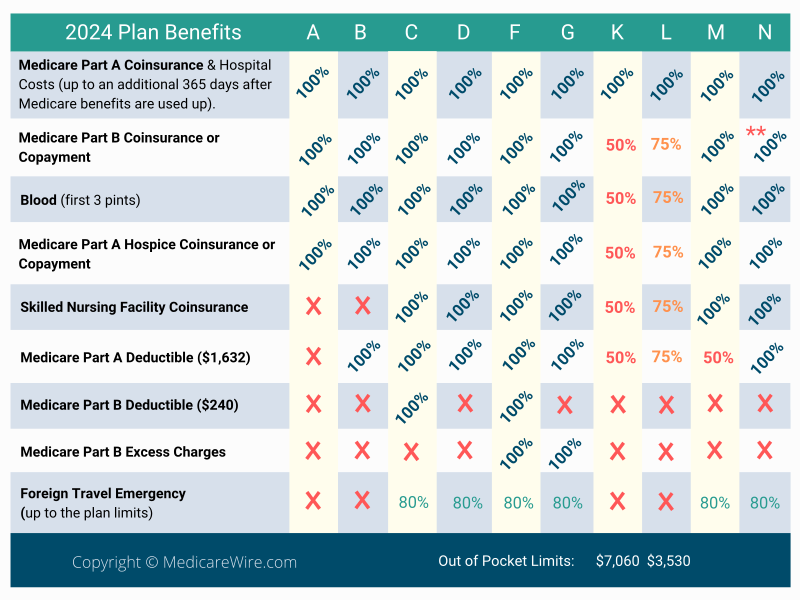
How Much Do Medicare Supplements Cost?
Medigap plans are standardized, but policy prices are set by the individual insurance companies selling them. Companies set their monthly premium rates in one of three ways:- Attained-age-rated: Monthly premiums are based on age at the time of purchase. Premiums increase as you age.
- Community-rated: Monthly premiums are the same for everyone in the policy, regardless of age.
- Issue or entry age-rated: Monthly premiums are lower if you purchase the policy at a younger age. Rates do not increase with age.
Hi there. MedicareWire offers a 100% FREE Medigap Rate Comparison Service
. It will arm you with all of the information you need to make an informed decision.Get Your Free Medicare Supplement Rate Comparison
We are retired seniors, not insurance agents. Our goal is to help folks, just like you, by making sure you have access to rates from all carriers without a sales pitch. No Calls. No Email Spam. No Kidding!
Medigap Plans F, G, and N: Which Plan Is Best?
Medicare Supplement Plans F, G, and N are the most popular Medigap plans sold, but are they the best? Not necessarily. When considering which Medicare Supplement Plan is best for you, it’s important to identify your current and future healthcare needs. This is the only way you can determine if a particular supplement is a better plan option for you.Plan F
Medigap Plan F offers the most comprehensive coverage allowed by Medicare. It covers all deductibles, coinsurance, and copayments in Original Medicare. With this plan, you have first-dollar coverage. Unfortunately, this plan is only available to individuals who qualified for Medicare prior to January 1, 2020. Opting for the most comprehensive plan can provide assurance and peace of mind. However, this plan's cost is significantly more than basic plans. Select the plan that strikes the best balance between one’s specific healthcare needs and budget. Related: Medicare Plan F vs Plan G: Which is Better in 2023?Plan G
If you want or need comprehensive coverage, but you don't qualify for Plan F, then Plan G is what you want. Plan G covers all Original Medicare costs except the Part B deductible ($240). And, in most cases, it's actually more affordable than Plan F when you factor in the deductible. Also See: 9 Medicare Plan G Pros and Cons You Can’t IgnorePlan N
If you are a healthy individual, Plan N might offer the best balance of coverage vs. cost. It covers all of the big costs, just like F and G, but it leaves you with some minor Part B costs. The reason Plan N supplemental insurance plans work so well for healthy people is that they don't use a lot of medical services. As a result, the monthly premiums are 20% to 30% lower than Plan G. Even though this plan does not cover Part B excess charges, there's a small copay for doctor office visits and emergency room visits, healthy people save money. When comparing the benefits of this plan, remember that Medicare covers 100% of your annual wellness visits and preventive care costs, like vaccinations. Also See: Medicare Plan N vs Plan G: Which Supplement is Best for You?Find Plans in your area with your ZIP Code
Other Medigap Plans
When budget is as much a consideration as coverage, look at Plan K and High Deductible Plan G. Both of these Medicare plans have low premiums, starting around $40 to $50 per month, but they work very differently. Plan K is one of two plans with an annual out-of-pocket limit. When you reach the annual limit, the policy begins paying all covered costs. The 2024 Plan K limit is $7,060. Until you reach the out-of-pocket limit, Plan K pays 50% of your costs. However, it does not cover the Part B deductible or excess charges. And, it does not include coverage for foreign travel emergencies. Plan K can save you money if you are in reasonably good health. Even though it does not cover 100% of the big costs right away, it's there if you have an extended hospital stay. For More Information: How Does the Plan K Medicare Supplement Work? Like Plan K, High Deductible Plan G (HDG) has an annual out-of-pocket limit, of sorts. It's the annual deductible ($2,800 in 2024). However, unlike Plan K, HDG doesn't pay anything until your out-of-pocket expenses reach the full deductible. Then it pays all costs until the end of the year. Also See: 9 Facts About High Deductible Plan G and How it WorksWhat Healthcare Providers Are Covered?
Generally, Medicare Supplement Plans cover all providers that accept Medicare, so long as the provider is accepting new patients. However, some plans offer plans with more limited coverage and may require you to obtain healthcare services from a specific network of providers affiliated with their plan. These are called Medicare SELECT plans. For some individuals, having a Medicare SELECT plan with a designated provider network makes sense as these plans cost less. Having a more restrictive plan can also provide cost savings for certain services due to potential discounts associated with the network.Best Medicare Supplement Companies In 2023
At last count, there are more than 200 companies that sell Medicare Supplement Insurance. Which Medicare Supplement provider is the best? These are our top choices.AARP / UnitedHealthcare Medicare
AARP isn't an insurance company, but it partnered with UnitedHealthcare, the largest insurer in the nation, to offer Medicare Supplements to its members. Today, United Healthcare covers more than 43 million people in all 50 states and most U.S. territories. They offer Medicare Supplement Plans to an estimated 4.4 million people, making them the largest provider with over 30% market share. Call 1-855-728-0510 to speak with an agent contracted with AARP/UHC.AARP Pros and Cons
- A rating from A.M. Best
- Offers Medicare Part D prescription drug coverage
- Dental and vision benefits are available
- The UHC website requires consumers to submit personal information to get plan information.
- Medicare SELECT plans, where available, have network restrictions.
Mutual of Omaha
Mutual of Omaha has been in business for more than 100 years and offers coverage coast-to-coast. Their website explains everything you need about Medigap plans clearly and easily, taking out the frustration and guesswork from enrolling. Mutual of Omaha's website allows you to connect with an agent, receive a quote, and apply for Medigap plans. Call 1-855-728-0510 to speak with an agent contracted with Mutual of Omaha.Mutual of Omaha Pros and Cons
- A+ rating from A.M. Best
- In the Medicare Supplement business longer than any other insurer
- Offers Medicare Part D prescription drug coverage
- Dental benefits available
- Doesn’t offer all types of Medigap plans
- Plans not available in Massachusetts
- Their rate increase history is not as favorable as the top health insurance companies
Humana Medicare
Humana, ranked number 41 on the Fortune 500 List, is one of the largest and oldest U.S. health insurance providers. It offers Medicare Supplement plans in all 50 states, Washington, D.C., and Puerto Rico. Humana offers many perks to its Medicare plan members, including SilverSneakers memberships. Humana offers additional insurance coverage beyond the Medicare Supplement requirements, including cost-sharing options for vision and dental care. Despite its size and benefits, Humana's premium prices are often higher than those of its competitors, and health plan customers file more complaints. This should not deter Medicare Supplement customers, because Humana has an A+ financial rating from A.M. Best. Call 1-855-728-0510 to speak with an agent contracted with Humana.Humana Pros and Cons
- A- rating from A.M. Best
- Offers Medicare Part D prescription drug
- Dental and vision plans are available
- Customers file more complaints than competitors
- Plans not available in Virginia
Blue Cross Blue Shield
Blue Cross Blue Shield (BCBS) is an association of 34 independent health plans, including Anthem, Highmark, Premera, Regence, Wellmark, and Florida Blue, to name just a few. The association has plans in all 50 states, Washington, D.C., and Puerto Rico, covering an estimated 3.6 million Medicare beneficiaries. Many of the BCBS companies are 501(c)(3) non-profit organizations. And a few companies are the largest healthcare organizations in the states where they operate. Call 1-855-728-0510 to speak with an agent contracted with Blue Cross Blue Shield.Blue Cross Blue Shield Pros and Cons
- A rating from A.M. Best
- Plans available in all 50 states, Washington, D.C., and Puerto Rico
- Offers Part D prescription drug plans
- All types of Medigap plans aren’t available in every area
- Customer satisfaction is inconsistent from one BCBS company to another
Aetna Medicare
Aetna was originally founded as a life insurance company in 1853. It was acquired by CVS Health in 2018 to provide a highly-integrated experience for customers. Today, Aetna is a leader in Medicare Supplement insurance plans, offers a wide range of plan options and benefits for its customers at competitive rates. The company offers seven Medigap plans, including high-deductible Plan F and G options. However, not all of them are available everywhere. Call 1-855-728-0510 to speak with an agent contracted with Aetna.Aetna Pros and Cons
- Aetna has a variety of Medicare Supplement plans. This makes it easy to find the one that suits your needs.
- Customers looking to increase their Medicare coverage can find affordable Medicare Supplement plans.
- Some Aetna Medigap plans cover emergency care while traveling abroad.
- If you move, your coverage will not be modified or canceled as long as you continue to pay your monthly premiums.
- Concerns expressed by customers about Aetna’s customer service can be a cause for concern
- Aetna does not offer plans C, D K, L, or M.
Cigna Medicare
Cigna has been in the insurance business for more than 200 years. Cigna is well-known for its low rates, reliable service, clinic and healthcare provider networks, and no-cost extras it offers to its customers. All Cigna Medigap plans are available online for free or through independent insurance agents and agencies. Call 1-855-728-0510 to speak with an agent contracted with Cigna.Cigna Pros and Cons
- A rating from A.M. Best
- Offers Medicare Part D prescription drug coverage
- Offers additional discounts for those who apply for coverage online
- Doesn’t offer all types of Medigap plans
- Plans not available in Massachusetts and New York
How We Selected the Best Medicare Supplement Companies
To select the top Medicare Supplement companies for 2023, MedicareWire evaluated nationwide carriers on the following merits:- The number of states and territories in which they provide coverage
- The types of Medigap plans they offer
- A.M. Best financial rankings (which may impact the ability to pay claims)
- J.D. Power rankings for consumer feedback
- Availability of a stand-alone Medicare Part D plan
- Availability of additional coverage beyond what’s required of Medigap plans by federal regulations
Who Is Eligible for Supplemental Medicare Insurance?
Eligibility for a Medicare Supplement Plan is determined by several factors. While all plans are available to those who qualify for Medicare Part A and Medicare Part B at age 65, eligibility after your initial enrollment period may be limited based on existing health conditions or by the state of residence. Also See: Why Can You be Denied a Medicare Supplement Plan? If you have a Medicare Advantage plan, you are not eligible for a Medicare Supplement without first switching back to Original Medicare. And, if you are under age 65 and have Medicare due to a disability, be aware that Medicare does not guarantee coverage, but a few states do. Keep in mind that availability, cost, and protections differ from state to state. Consult with a licensed insurance agent about your state's regulations prior to making any decisions. For More Information: Medicare Supplement (Medigap) Plans: Coverage, Costs, and EligibilityYour Medigap Protections
By federal law, everyone is entitled to get Medicate Supplement Plan coverage at age 65 during their Medigap open enrollment period. Your open enrollment period starts the first month you sign up for Medicare Part B at age 65 or older and ends six months later. This includes individuals who delayed Medicare enrollment because they had creditable coverage through their employer. During your Medigap open enrollment period, your choice of Medicare supplemental insurance is wide open. There is no medical underwriting process to go through. You can choose any plan you want from any insurance company you choose in your area. Your policy cannot be canceled by the insurance company even if your health status changes. So long as you pay your premiums, your policy will continue to renew. If you’re already enrolled in a Medigap plan, you may apply to switch plans. However, once your open enrollment period is over, you no longer have guaranteed issue rights and your application can be turned down Companies may also delay coverage for up to six months for a pre-existing condition if you didn’t have creditable coverage before signing up for Medicare.How To Enroll In A Medicare Supplement Plan
Enrolling in a Medigap plan is easy. Medicare Supplements may be purchased through an insurance agent, an agency, or directly through the insurance carrier. And, because there’s no annual open enrollment period, you can enroll at any time. The best time to get a Medigap policy is during your Medigap Open Enrollment period. During this 6-month period, you can buy any Medigap plan sold in your state, even if you have pre-existing health conditions. Follow these four steps:- Enroll in Medicare Part A and Part B. You cannot begin applying for Medigap until you have completed this step. If you’re enrolled in a Medicare Advantage plan, you will need to drop your plan before buying a Medigap plan.
- Find which insurance companies in your state sell Medigap plans by using our finder tool or Medicare.gov.
- Compare costs between companies. Costs will vary depending on the company, state, age, gender, and use of tobacco.
- Select the plan that works best for you and purchase your policy.
What Are The Alternatives?
While a Medicare Supplement Plan can be beneficial, there are alternatives that may be more affordable, including:- Medicare Advantage Plans
- Medicare Savings Accounts
- Medicare Special Needs Plans
- Medicaid and Medicare Savings Programs
- Veteran Healthcare
Medicare Advantage Plans
Those looking for more healthcare benefits with an annual limit on out-of-pocket costs should compare Medicare Advantage Plans in their area. Many Medicare Advantage Plans cover prescriptions, routine dental care, vision, hearing aids, and transportation services, just to name a few. For More Information: Top Medicare Supplement vs Medicare Advantage Pros and Cons When looking at Medigap vs. Medicare Advantage Plans, take into account HMO and PPO provider restrictions. If you use certain providers regularly, you will want to make sure they are in the network for the plan you choose and verify whether their services are covered under the plan’s terms and conditions. Pay close attention to deductibles, copayments, and coinsurance associated with the healthcare service you use most. These costs are often higher in Medicare Advantage Plans than in Original Medicare. Make sure to consider travel, as well. Medigap policies cover you throughout the United States, whereas Medicare Advantage plans do not (except in emergencies). And, many Medigap plans cover foreign travel emergencies, whereas Medicare Advantage Plans don't.Medicare Savings Accounts
Another alternative is a high-deductible health plan (HDHP) with a Medicare Savings Account (MSA) plan. With an MSA, any money saved from the high deductible can be used in the case of medical emergencies or catastrophic events. Though this type of plan requires more out-of-pocket spending than a Medigap plan, it is typically less expensive. Each year the beneficiary receives an initial lump sum payment. Deductibles and out-of-pocket maximums should be heavily considered before making a decision to go with an MSA.Medicare Special Needs Plans
Special Needs Plans, or SNPs, are Medicare Advantage Plans specially tailored for three different needs:- Dual-eligible (Medicare and Medicaid) individuals
- People with certain chronic illnesses
- Institutionalized and home-bound individuals
Medicaid and Medicare Savings Programs
Those who qualify for both Medicare and Medicaid may not require or be eligible for supplemental coverage. Dually eligible individuals generally have limited out-of-pocket expenses. This includes prescription medication costs, which are largely covered by the Extra Help program. Dual-eligible individuals may also want to consider a dual-eligible Special Needs Plan (D-SNP). These are Medicare Advantage Plans designed specifically for people with both Medicare and Medicaid benefits. D-SNP plans are available in most locations.Veteran Healthcare
If you are a veteran (thank you!) and have VA health benefits, you may be able to use the VA to help cover costs not covered by Medicare. As a veteran with both VA and Medicare healthcare benefits, Medicare is the primary payer and the VA is secondary. If you use a VA hospital or get pre-approval for VA Community Care, Medicare pays its share and the VA pays the remainder. Depending on your VA status, you may or may not be required to pay a copayment. It is important to note that no Medicare plan options cover long-term care, in-home assistance, or adult daycare. Depending on the person’s needs, long-term care insurance can provide all or part of the cost of these types of care.What To Consider Before Choosing a Plan
When choosing a Medicare Supplement, it is important to consider the following factors:- Cost – Consider the monthly cost of a Medigap plan in comparison to how much coverage you’ll receive for your money. Don’t forget to factor in additional coverage such as prescription drugs and vision or dental care.
- Coverage – Your plan should provide the coverage that best meets your needs. Look closely at the costs covered and excluded by various plans.
- Nation-wide acceptance – Verify that the plan you are selecting is accepted by doctors and hospitals nationwide, not just within your hometown.
- Quality of customer service – Investigate the reputation of any company you are considering for their customer service ratings and reviews from other customers.
- Cost sharing – Most Medicare Supplement Plans require some sort of cost sharing for services received. Be sure you know what your financial obligations will be when accessing healthcare services.
- Financial strength and experience – A Medigap policy is a financial instrument. Getting a policy from the lowest-cost insurer may work out initially, but what if they go out of business?
- Rate increase history – Depending on the insurer, Medigap policies tend to increase between 4% and 9% per year. It's important to get the Medigap rate increase history on the carriers you're considering.
Next Steps
Now that you know how to find the best Medicare Supplement Plan for you, and which companies we rated as our top picks, the next step is to get prices or speak with an agent who can answer more questions. We are here to help you get quotes (pricing) on all plans from all insurers in your area with complete details. If you don't have an insurance agent, we highly recommend HealthCompare, an Allstate company. They are licensed in all 50 states and carry all of the top plans. You can reach them toll-free at 1-855-728-0510 (TTY 711).Frequently Asked Questions
Medicare Supplement Plan F and Plan G are nearly identical. Technically, Plan F is better because it offers first-dollar coverage. However, the one cost that Plan G does not cover, the Part B deductible, is often less than the annualized premium difference between the two plans. As a result, Plan G holders generally save a little money. Read Medicare Plan F vs Plan G: Which is Better in 2023? to learn more.
Your specific healthcare needs, lifestyle, and budget will determine which Medicare Supplement Plan is best for you. Plan G is now the most popular Medicare Supplement Plan for new Medicare enrollees. It covers more Medicare costs than any other plan, with the exception of Plan F which is no longer available to new beneficiaries. Plan G enrollees pay only their Medicare Part B deductible. After that, the plan covers 100% of all Medicare-approved services. Read Find the Best Medicare Supplement Plan for You in 2023 to learn more.
One of the best features of Medicare supplement insurance is that you can apply for a plan anytime. To enroll, you must first be enrolled in both Medicare Part A and Part B. However, an insurance carrier doesn't have to accept your application unless you have guaranteed-issue rights. This is also true if you want to change Medicare supplements to get a better rate or different coverage. Learn more about enrollment rules on this page.
Medigap Plans F, G, and N are the three most popular Medicare Supplement Plans. Plan F, the most comprehensive Medigap option, provides 100% coverage for all Medicare-approved services. Plan G makes beneficiaries responsible for the annual Medicare Part B deductible. After that, beneficiaries have 100% coverage on all Medicare-approved services. Plan N, which has copays on doctor visits and emergency room visits, is the most affordable option for individuals who do not require regular medical care but are interested in comprehensive inpatient coverage. To get rates on these plans where you live, enter your zip code on this page.
Best Medicare Supplement Plans by State
Citations and References
- 2022: Guide To Choosing A Medigap Policy, Medicare.gov, Accessed January 30, 2023
- Original Medicare (Part A and B) eligibility and enrollment, CMS.gov, Accessed January 30, 2023
- How to compare Medigap policies, Medicare.gov, Accessed January 29, 2023
- Costs of Medigap policies, Medicare.gov, Accessed January 28, 2023
- Find a Medicare plan, Medicare.gov, Accessed January 28, 2023
- How to get prescription drug coverage, Medicare.gov, Accessed January 28, 2023
- When can I buy Medigap?, Medicare.gov, Accessed January 28, 2023
- Switching Medigap policies, Medicare.gov, Accessed January 26, 2023
- What’s Medicare Supplement Insurance (Medigap)?, Medicare.gov, Accessed January 26, 2023
- Medigap & Medicare Advantage Plans, Medicare.gov, Accessed January 26, 2023
- VA health care and other insurance, VA.gov, Accessed January 26, 2023
- AARP/UnitedHealthcare Medicare Supplement Reviews. MedicareGuide.com, Accessed January 26, 2023
- AARP History. AARP.org, Accessed January 26, 2023
- AARP® Medicare Supplement Insurance Plans insured by UnitedHealthcare. AARP Medicare Plans, Accessed October 15, 2022
- Financial Strength and Credit Ratings. Cigna.com, Accessed 9/22/2021.
- Cigna Company History. Cigna.com. Accessed October 15, 2022
- Financial Strength. MutualOfOmaha.com, Accessed October 15, 2022.
The Medicare Supplement information on this page originates from CMS Data Files, is maintained by David Bynon, and was last updated on .